The Ultimate Setup Guide for Your G403 Prodigy Wireless
Introduction
The G403 Prodigy Wireless occupies a sweet spot for buyers seeking a comfortable, mid‑sized wireless mouse with strong gaming pedigree and everyday usability. Whether chosen for twitch‑sensitive first‑person shooters, click‑heavy MOBAs, or long hours of productivity, the G403 aims to balance ergonomics, sensor performance, and battery life. This guide examines what the mouse offers, walks through an effective setup and optimization process, compares it with closely related models, and outlines what to consider before buying.
Product review and analysis
Design & ergonomics
The G403 Prodigy Wireless follows a classic right‑handed, slightly arched silhouette that has proven comfortable for an array of grip styles — palm, claw, and hybrid users will find it approachable. The hump is centered toward the rear, supporting the palm without being overly tall. Side contours provide a natural resting place for the thumb with textured rubber grips that enhance hold during intense sessions.
Key real‑world observations: people with small to medium hands often report an immediate fit; larger‑handed users tend to prefer a fingertip or claw grip rather than full palm contact. The mouse's weight, which in many revisions sits in the mid‑range and often allows an optional internal weight, is light enough for flicks yet retains enough heft for controlled aiming when desired.
Sensor and tracking performance
Sensor choice can vary between production runs. Later revisions typically include Logitech’s high‑performance HERO family sensor or equivalent optical sensors that deliver accurate tracking, low jitter, and consistent lift‑off distance. For gamers, the most relevant metrics are consistent CPI (DPI) steps, minimal acceleration, and stable tracking across mousepads.
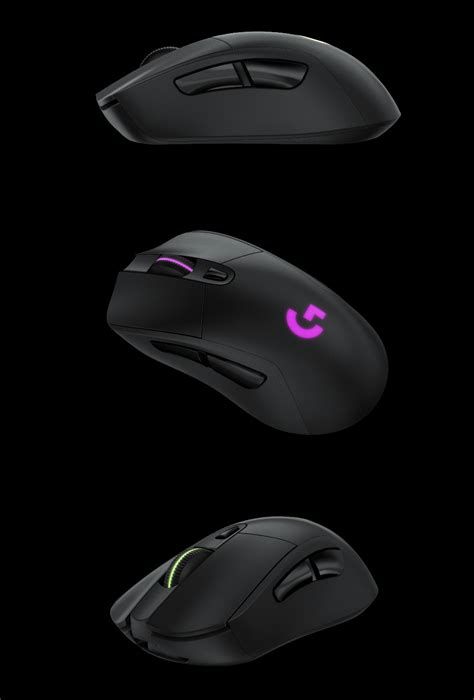
In practical use, the G403 Prodigy Wireless performs very well for 400–1600 eDPI setups common among FPS players and offers reliable precision for high‑DPI productivity tasks such as photo editing and CAD. Users migrating from older gaming mice may notice tighter tracking and fewer micro‑corrections when the sensor is calibrated through software.
Wireless reliability & battery
The wireless implementation focuses on low latency and stable connectivity suitable for competitive gaming. Depending on the exact variant, it operates either on a dedicated USB receiver (often marketed as low‑latency or LIGHTSPEED technology) or a Bluetooth/dual‑mode setup. The most important takeaway for buyers: ensure which wireless mode the unit supports and whether that matches their needs (single‑player couch usage vs. competitive play at LANs).
Battery life varies with lighting settings, polling rate, and sensor activity. With RGB lighting off and conservative polling rates, users commonly report multiple days or weeks of typical use between charges. RGB and maximum polling settings naturally reduce run time. Because battery expectations are a frequent buying concern, users should prioritize the variant that matches their required balance between lighting and longevity.
Buttons, switches, and customization
Primary switches are tactile and responsive with a short travel suitable for fast clicking. Side buttons are positioned for quick reach without accidental presses. The onboard memory in many G403 units stores DPI profiles and button assignments, which is useful for carrying settings to other machines without reinstalling software.
Customization is accomplished mainly through Logitech’s software (G HUB). Profiles, macros, DPI stages, lighting effects (if present), and surface tuning can be adjusted in software and synced to onboard memory as needed. For users who prefer minimal software, the core features—DPI switching and basic macros—are often accessible without deep software reliance.
Shop the latest Electronics picks on Amazon.
Shop Amazon →Build quality and practical durability
Materials and assembly are typically robust for the price tier. The main clicks are rated for many millions of actuations; scroll wheels are firm with defined notches. The outer shell resists fingerprints and scuffs better than glossy finishes. In daily life, the G403 stands up well to rigorous use: spilled drinks avoided, it will retain performance for years in most users’ hands.
Pros & Cons
- Pros:
- Comfortable ergonomic shape that fits a wide range of hand sizes and grips
- Reliable wireless performance suited to gaming and productivity
- Accurate optical sensor with low latency and consistent tracking
- Onboard memory for profile portability
- Good build quality at a competitive price point
- Cons:
- Shape is right‑handed only — not suitable for left‑handed users
- Weight may feel heavy to those who prefer ultralight mice (unless optional weight removed)
- Battery life depends heavily on lighting and polling settings
- Some users may prefer an ambidextrous or flatter profile for fingertip grip
Comparison table
The table below compares the G403 Prodigy Wireless against two common alternatives that buyers often consider: the wired G403 and a popular premium wireless alternative. Note that exact specifications and hardware revisions may vary—always check the product label for the specific sensor and connectivity of a given unit.
| Model | Sensor (typical) | Weight (typical) | Wireless Tech | RGB | Price Tier |
|---|---|---|---|---|---|
| G403 Prodigy Wireless | HERO or equivalent optical | Mid (with optional internal weight) | USB receiver (low‑latency) / sometimes Bluetooth | Yes (model dependent) | Mid |
| G403 Wired | High‑accuracy optical | Mid (often lighter due to no battery) | Wired USB | Yes (model dependent) | Lower to mid |
| Premium Wireless (e.g., high‑end contender) | Top‑tier HERO/Pro series | Ultra‑light to mid | Advanced low‑latency wireless | Yes | Premium |
Buying guide: what to consider before choosing the G403 Prodigy Wireless
1. Determine hand size and grip style
Measure hand length (from wrist crease to tip of middle finger) and width (across the knuckles). Generally:
- Small hands: fingertip or claw grips work best; check for a flatter profile
- Medium hands: G403’s medium hump suits palm and claw grips
- Confirm the package includes the mouse, USB receiver (if applicable), charging cable, and any optional weight or documentation.
- Inspect the mouse for shipping damage and verify the model name and firmware identification printed on the underside.
- Insert the USB receiver into a rear‑USB port or extension close to the mouse for best signal (a USB extension or desktop hub reduces interference).
- If the mouse supports Bluetooth and the user prefers it, place the PC into Bluetooth pairing mode and pair per the manual (note: Bluetooth often has higher latency than a dedicated receiver).
- Charge the mouse fully before intense use; initial charge helps calibrate battery reporting.
- Set DPI (CPI) stages: common starter values are 400, 800, 1600 for FPS players; productivity users often prefer 1600–3200 for smooth cursor movement across multi‑monitor setups.
- Adjust polling rate: 1000 Hz provides the lowest input latency; reduce to 500/250 Hz only if troubleshooting USB bandwidth or battery life.
- Program side buttons and DPI toggles: map these to in‑game actions or OS shortcuts for faster workflow.
- Save profiles to onboard memory if you switch machines frequently or use a gaming laptop at events.
- Disable RGB lighting or use conservative profiles to extend run time.
- Turn the mouse off when traveling or during long breaks to preserve charge.
- Keep a short charging cable or dock handy if used in wired mode for marathon sessions.
- Register power‑saving profiles with the software for different usage patterns (gaming vs. office).
- Perceived lag: ensure the USB receiver is unobstructed, use a rear port or extension, and avoid crowded 2.4 GHz environments.
- Tracking hiccups: clean the sensor window and test on multiple surfaces; enable surface tuning in software.
- Bluetooth stutters: switch to the dedicated receiver for competitive play or increase signal strength with a USB extension.
- Battery drain: check for rogue lighting profiles, background software, or multiple active profiles that may keep the mouse awake.
3. Understand wireless expectations
If attending LANs or playing competitively, confirm that the model’s wireless mode is optimized for low latency (and consider carrying the dongle). If battery life and convenience are the priority, verify manufacturer battery claims and read user reports about realistic run time under typical lighting/polling conditions.
4. Weight and balance
Decide whether a mid‑weight mouse works for one’s preference or if an ultralight mouse is better. The G403’s optional internal weight allows some tuning; buyers who change sensitivity or play fast‑paced games may prefer a lighter configuration.
5. Software and customization
Logitech’s configuration software enables DPI stages, macros, lighting presets, and surface tuning. For players who rely on custom profiles across multiple titles, ensure the software supports the desired depth of configuration and whether profiles can be stored onboard the mouse.
6. Real‑world testing and warranty
Test the mouse for button feel, grip comfort, and tracking (if testing in‑store). Check warranty length and service options; a good warranty reduces long‑term ownership risk.
Discover deals on Electronics — updated daily.
View Offers →Setup and optimization: step‑by‑step
Unboxing and initial checks
Physical setup
Software installation and firmware
Install the official configuration software (Logitech G HUB or another current official utility). Open the app, check for firmware updates, and update the mouse firmware before making advanced configuration changes — firmware updates can improve tracking, battery life, and button behavior.
Basic configuration steps
Surface tuning and real‑world sensitivity
Use surface tuning (if available) to calibrate the sensor to your mousepad. For in‑game sensitivity, calculate eDPI by multiplying in‑game sensitivity by mouse DPI (e.g., 800 DPI × 2.0 sensitivity = 1600 eDPI). Match this to familiar settings when switching mice to maintain muscle memory.
Battery management tips
Troubleshooting common issues
Real‑world use cases and recommended settings
Competitive FPS
Recommended starting point: 400–800 DPI, polling rate 1000 Hz, disable heavy lighting effects, optional weight removed for faster flicks. Use a cloth or hard pad tested for low friction and consistent glide.
MOBA / MMORPG
Recommended starting point: 800–1600 DPI, medium weight preferred for precise cursor motion and skill aiming. Program side buttons for inventory or skill binds for efficient play.
Productivity / Creative Work
Recommended starting point: 1200–3200 DPI depending on screen resolution and multi‑monitor setups. Enable DPI stages for quick switching between detailed work (low DPI) and desktop navigation (high DPI). Macros can help automate repetitive workflows in design and editing software.
Conclusion
The G403 Prodigy Wireless is a strong all‑rounder for those who value a comfortable ergonomic shape, reliable wireless performance, and sensible customization without stepping into the highest premium price tier. It suits a wide range of users — from competitive gamers seeking low latency to creatives who need dependable day‑to‑day control. The best results come from matching the mouse’s configuration to one’s hand, grip, and use case: fine‑tuning DPI, polling rate, and surface tuning will unlock the mouse’s potential. Prospective buyers should verify the specific sensor and wireless features of the production run they consider, test the shape if possible, and follow the setup steps above to get optimal performance from day one.